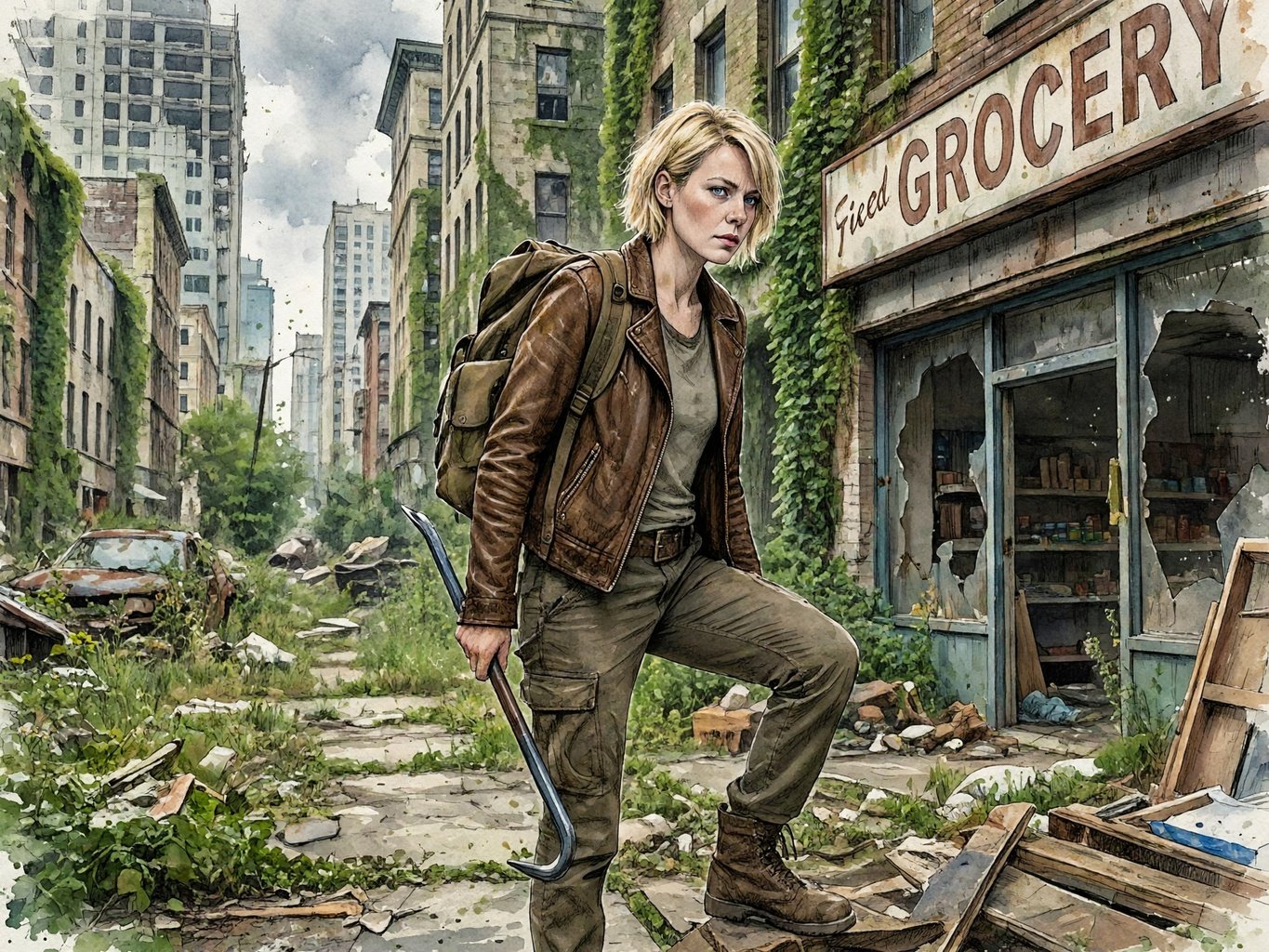
Most people in RED/BLUE can remember the lives they lost. They remember their homes, their families, their routines. They know who they were before the world fell apart, even if they no longer recognize the people they are becoming.
Doe doesn’t have that comfort. Or that burden.
When she wakes after a car accident, she has no memory of her life. No familiar faces to ask for. No name to give the strangers tending to her. Even the sound of her own voice feels unfamiliar.
Dasha gives her something to answer to: Doe. As in Jane.
It’s a name meant to fill an empty space until the real one returns. But the woman who begins answering to it soon becomes someone worth knowing.
A Place at the Table
Vernon High School has become a refuge for survivors, with classrooms repurposed into living spaces and people working together to keep one another alive. For Doe, it is also the first place where she can begin building a life she actually remembers.
That starts in small ways. A tour of the school. A meal in the cafeteria. Someone introducing her to the people sitting across the table.
There is something revealing about how she responds to Shane’s teasing. He questions her driving abilities, having personally helped pull her from a wrecked car. It would be understandable if she found the remark insensitive. Instead, she likes it. For a moment, she feels included.
She’s being spoken to as someone who belongs there.
In a world full of enormous losses, that little exchange matters.
So does her sense of humor. Doe cannot remember attending high school, but she can still appreciate the irony of people seeking sanctuary in the very place most teenagers spend years trying to escape. Apparently, some opinions survive even when the memories supporting them have disappeared.
The Trouble with Being Brave
Doe is quick to volunteer when she hears that Vernon needs more supply runners. The job means leaving the safety of the school and venturing into a world where the creatures outside aren’t the only danger.
Her willingness is admirable. Her reasoning is harder to hear.
She suggests that if she dies, no one will suffer much of a loss. She’s new. Nobody really knows her.
Dasha immediately objects.
That moment says a great deal about both women. Doe is already prepared to make herself useful, but she hasn’t yet understood that she doesn’t have to earn the right to matter. To her, the absence of a remembered life makes her seem expendable. To Dasha, there is already someone sitting beside her who would be missed.
Doe’s courage comes with questions. How much of it is determination? How much comes from having no memory of what she should fear? And how much comes from not yet placing enough value on her own survival?
Who She Becomes
The mystery of Doe’s past is part of her story, and I’ll leave those discoveries for readers. But there is another question unfolding alongside the obvious one.
While we wonder who she was, we get to watch who she becomes.
She listens. She notices people. She asks questions and offers to help. Friendships begin forming around her before she has a history to share with anyone. A borrowed name starts collecting experiences, attachments, and reasons to come home.
That is what makes Doe compelling to me. Her missing memories leave a frightening emptiness, but life keeps happening around her. People keep giving her reasons to take part in it.
And little by little, she does.
If you’ve read RED/BLUE, what struck you most about Doe? If you haven’t, what would frighten you more: remembering everything you’d lost, or having no idea what you should be missing? Tell Micah what you think.
