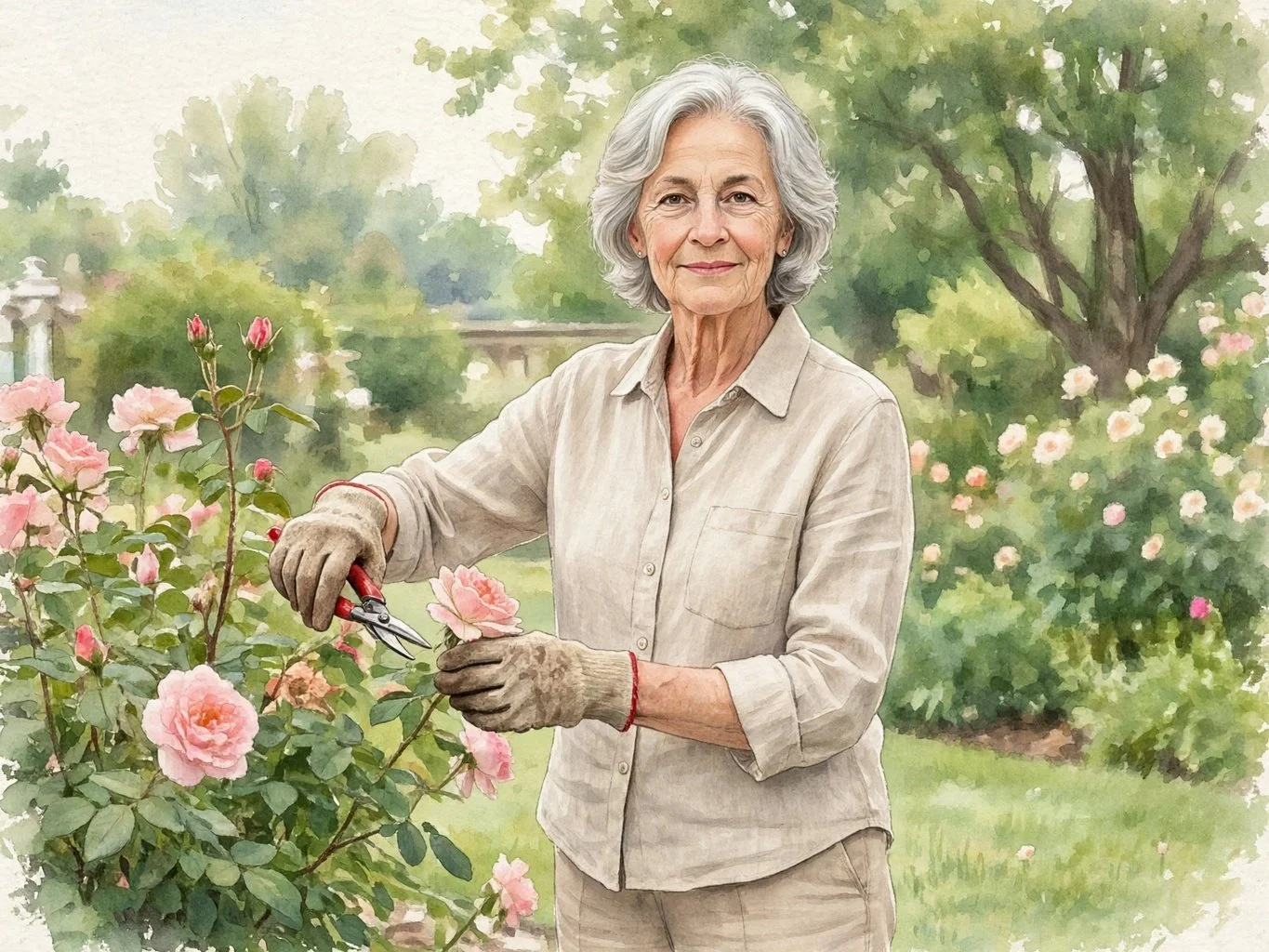
At eighty-five, a woman can become a collection of other people’s assumptions. She needs help. She needs rest. She couldn’t possibly understand what’s going on.
Then there’s the small matter of her being a witch.
Meet Olympia Blanchard, the matriarch at the opening of The Blanchard Witches. Her family spans three generations in Daihmler County, Alabama, and her daughters—Artemis, Demitra, and Nacaria—are grown women with complicated lives of their own. Olympia stands at the center of a family whose magical inheritance comes tangled with love, grief, loyalty, and relationships that resist any easy sorting out.
You may come for the witches. Olympia gives you a reason to pull up a chair.
Eighty-five years is a great deal of living
An older woman at the center of a supernatural story brings a particular kind of weight to the page. Before a reader knows her history, her age makes a promise: there is history here.
Eighty-five years allows for an extraordinary accumulation of ordinary things. Changed minds. Departures. The slow discovery that someone you love is a person you cannot entirely understand. Those are possibilities age brings to a character, even before the story begins revealing the particulars.
With Olympia, that long perspective sits beside a magical legacy. The result is an inviting question: what does power mean to someone who has lived long enough to understand how much lies beyond anyone’s control?
Magic gives that question teeth. Family makes it personal.
A mother among mothers—and grown children
There is something wonderfully complicated about a family with several adult generations living within one another’s reach.
A daughter can build an entire life and still be somebody’s child. A mother can know her daughter intimately and still be startled by her. Familiarity offers comfort, but it can also make people careless. We sometimes stop asking questions of the people we believe we already know.
Olympia’s place in the Blanchard family puts those tensions close at hand. Artemis, Demitra, and Nacaria each have a relationship to their mother, while the wider family carries its own expectations of the woman at its center.
The word matriarch can sound grand and settled. It suggests somebody has the final say.
Anyone familiar with a large family may be smiling at that.
Being central to a family means occupying a place where different needs meet. Affection arrives there. So do disagreements, old hurts, and the expectation that somebody ought to know what to do next. It is a rich position for a character because love and responsibility can pull in several directions at once.
The woman behind the family title
It is easy to turn an elderly matriarch into a symbol: wisdom in a comfortable chair, waiting to dispense exactly the advice the younger characters need.
But mother, grandmother, and matriarch are relationships. None is a complete description of a woman.
That distinction makes Olympia a compelling place to begin meeting the Blanchards. Her age matters. Her place in the family matters. So does the possibility of seeing beyond those roles to the person carrying them.
What do younger generations recognize in an older woman? What do they overlook? How much of a family’s history becomes clearer when someone finally thinks to ask her about it?
Those questions give a character spotlight somewhere deeper to go than a list of powers.
The Blanchards inhabit a supernatural world, but the invitation into their family is familiar: come meet the people, learn how they fit together, and discover what happens when those bonds are tested.
Olympia is where that introduction begins. Eighty-five years old, with three generations around her—and plenty of reason for a reader to pay attention.
