Spend enough time with a group of old friends, and you’ll discover that nobody tells a story from the beginning. Someone mentions a party. Someone else corrects which year it happened. A former spouse enters the conversation, requiring an explanation for the person who wasn’t around back then. Before long, a story about a cookout has become an account of a marriage, a friendship, and a decision nobody understood at the time.
That is closer to how we come to know people. We meet them somewhere in the middle. The history arrives later. The Inner Circle unfolds in much the same way.
Meeting the Neighbors
The residents of Circleview Drive have years of shared experience before readers arrive. They have raised children, formed friendships, endured losses, and watched one another change. Their lives are already tangled together.
Instead of beginning with the first person moving onto the street and proceeding year by year, the novel moves between different points in that history. A chapter might place us six months ago, while another takes us back sixteen years. We see who they are at one moment, then discover something about the lives that brought them there.
First Impressions Have Their Limits
When we meet someone, we work with whatever they show us. An outspoken woman may seem entirely confident. A couple may appear comfortable together. Two friends may bicker so naturally that it is difficult to imagine a time when they weren’t close.
Then we learn something that changes the picture. Perhaps the confidence took years to acquire. Perhaps the couple’s ease followed a difficult period. Perhaps those friends once disliked each other and would be embarrassed to hear their earlier opinions repeated. Moving through time allows those discoveries to happen after we have formed an impression. The person hasn’t suddenly changed. Our understanding has.
Before You Knew What It Meant
An ordinary moment can become important in retrospect. At the time, it was a grocery trip. A conversation in a kitchen. An afternoon behind the houses. Nobody knew it would become something they remembered years later. That interests me about telling these lives out of order. Readers can encounter a moment, then return to the people involved with a different understanding of what they were carrying through it.
A joke may still be funny, but now we recognize the hurt beneath it. An act of kindness may mean more once we understand what it cost. An argument may become easier to follow after we discover how long the disagreement has been going on. The events remain where they belong in the characters’ lives. We learn about them when they can deepen what we already know.
Every Household Has Its Own Version
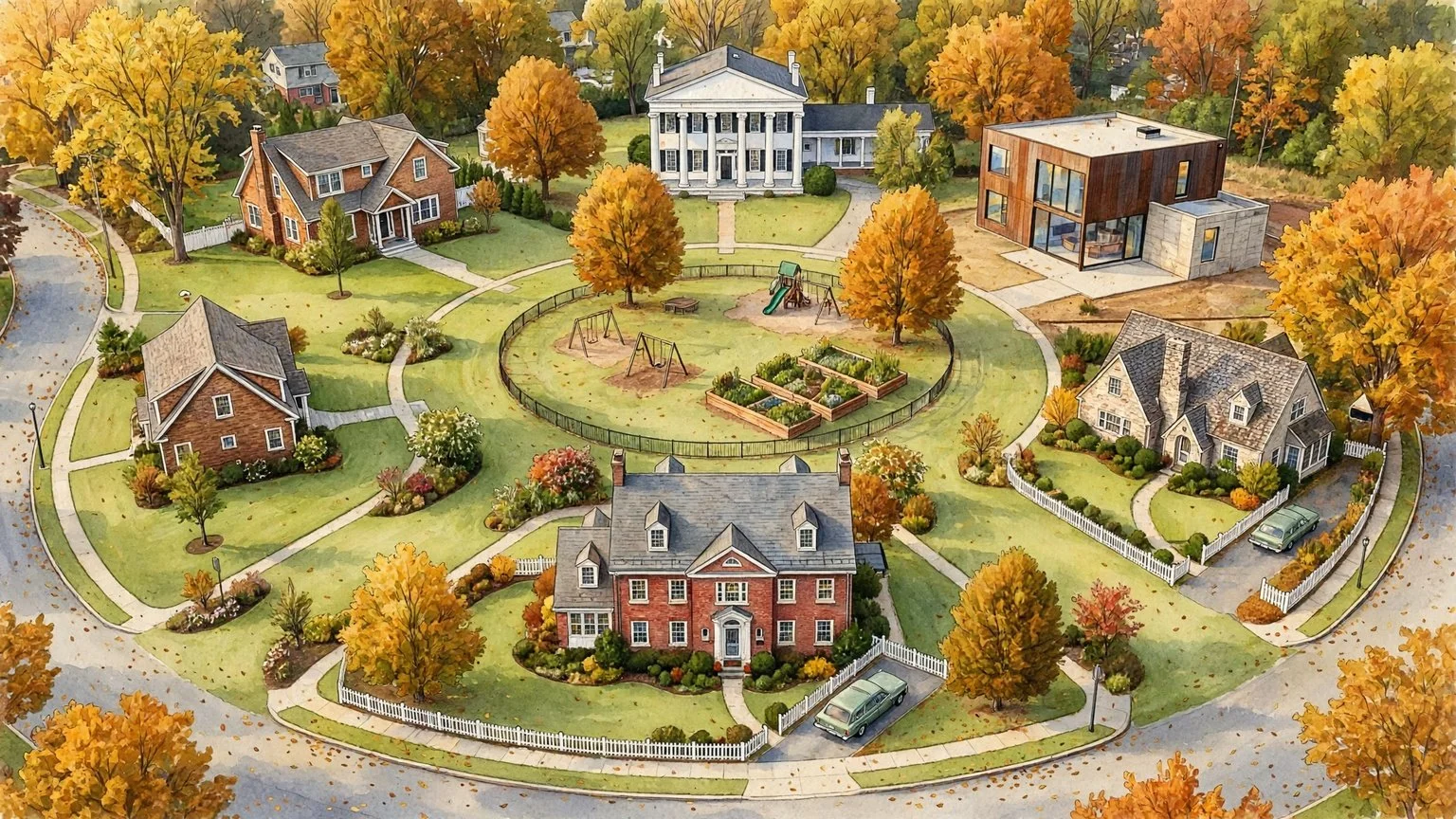
Circleview contains five homes, several marriages, children growing up, and friendships that overlap without being identical. Everyone has witnessed a different portion of the same history. One person remembers what was said. Another remembers what happened afterward. Someone else was absent and has accepted an explanation that the people present might dispute.
Moving among those lives and years lets the novel gradually widen the picture. It also leaves room for the distance between what the neighborhood believes and what an individual knows. People can share a garden, a picnic table, and years of conversation while keeping parts of themselves private.
Chronology alone would not tell us everything about them. Neither does familiarity.
How Memory Brings Us Back
We don’t usually remember our own lives in tidy sequence. A familiar place brings back someone who is gone. A child reaches an age that makes us remember being that young ourselves. An argument recalls the last time someone said those exact words. The present keeps opening doors into the past.
In The Inner Circle, the shared backyard helps connect those years. People gather there at different stages of their lives, bringing new joys and troubles into a space already full of memories.
As readers move through the novel, those memories begin belonging to them, too. The neighbors become more familiar, but they also become more complicated. We learn to look beyond the version of a person standing in front of us and consider who they have been. By the end, the question is larger than what happened next. It is how all those moments added up to the people who live here now.
